Meta Title: C-Section Recovery Week by Week: Complete Guide for Indian Mothers | FirstChoiceClub
Meta Description: Recovering from a caesarean in India? Our week-by-week guide covers wound care, diet, Japa traditions, and when to resume normal activity after a C-section.
📢 Affiliate Disclosure: This post contains affiliate links through our Amazon India storefront. We may earn a small commission at no extra cost to you.
A caesarean section is major abdominal surgery — and yet many new mothers in India feel pressure to "bounce back" within days, particularly with household expectations and the demands of a newborn. Understanding the true timeline of C-section recovery is one of the most important things you can do for your long-term health and wellbeing.
In India, approximately 17% of deliveries nationally (and over 40% in private hospitals in major cities) are caesarean births. If this was your birth experience, this guide is written for you.
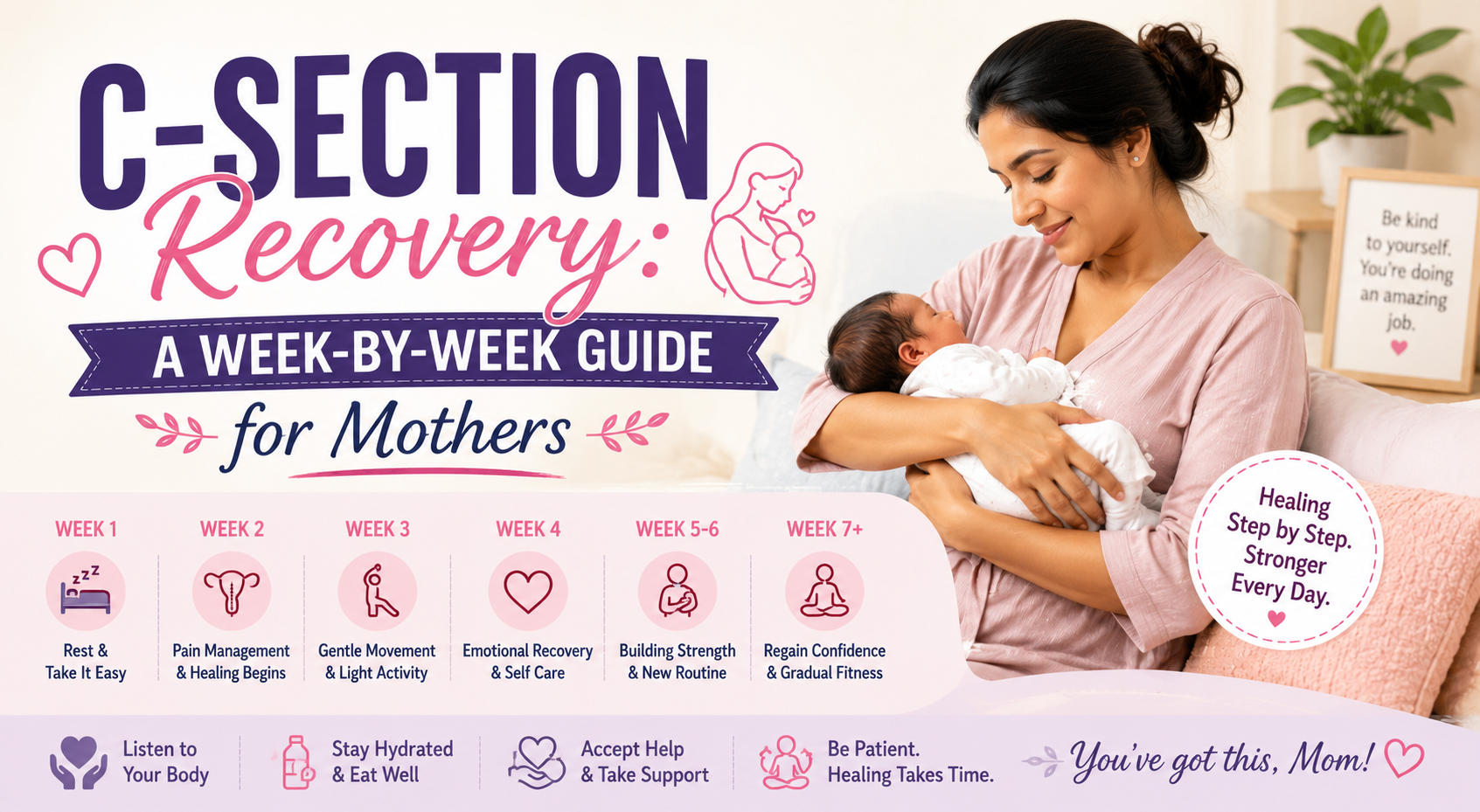
Week 1: The Hospital and Immediate Recovery
The first 24–48 hours after a C-section are spent in hospital recovery. You will have a urinary catheter, IV fluids, and pain management medication. Most women begin to sit up and attempt short walks within 12–24 hours of surgery — early mobility is important to prevent blood clots and support healing, even though it is genuinely uncomfortable.
Your wound will be covered with a dressing. Do not attempt to look at it until your doctor changes it. Wound pain is normal and manageable with the prescribed medications — do not try to manage without them in the first days. You need to be comfortable enough to breathe deeply and move, which is essential for recovery.
Breastfeeding is possible after a C-section and should be started as soon as you and your baby are stable. A nursing pillow placed over the wound area protects the incision from your baby's weight during feeding.
🛒 RECOMMENDED PRODUCT
C-Section Recovery Belly Binder / Abdominal Support Belt
An abdominal binder worn from around day 3 post-surgery provides gentle compression that reduces pain with movement, supports the wound area, and helps with the feeling of internal instability many C-section mothers experience. Ask your doctor before use.
Shop on Amazon India →Week 2: Home Recovery Begins
Most C-section mothers are discharged after 3–5 days. The second week at home is the most challenging — you are in a new environment without hospital support, managing a newborn while significantly limited in what you can do physically.
- You must not lift anything heavier than your baby for at least 6 weeks
- Climbing stairs should be minimised and done very slowly
- Driving is not permitted for at least 6 weeks
- Your wound may itch, tighten, and feel numb — all are normal
- Watch for signs of infection: redness spreading beyond the incision, increased swelling, discharge, fever above 38°C, or wound that opens
Family support during this week is not optional — it is medically essential. This is the traditional period for Japa care in Indian families, and the wisdom of that tradition is well-supported by modern medicine.
Weeks 3–4: Gradual Improvement
By weeks 3 and 4, most women notice a significant improvement in pain levels and mobility. Short walks are encouraged and beneficial. You may begin to feel more like yourself, but the internal healing from major surgery continues long after the surface appears healed.
The internal scar tissue takes 6–8 weeks to adequately heal and up to 12 months to fully remodel. This is why restrictions on lifting, sex, and strenuous exercise last 6 weeks minimum.
🛒 RECOMMENDED PRODUCT
Silicone Scar Sheets for C-Section
Silicone scar sheets, worn over the healed wound from about 6 weeks onwards, are one of the most evidence-supported methods for reducing the appearance of caesarean scars. Consistent daily use over 8–12 weeks produces the best results.
Shop on Amazon India →Weeks 5–6: Approaching Clearance
Your 6-week postnatal check-up is a critical appointment. Your doctor will examine the wound, assess your recovery, and advise on resuming activities including exercise, sex, and driving. Do not skip this appointment even if you feel well — internal healing and pelvic floor assessment cannot be done without examination.
C-Section Recovery Diet: Indian Foods That Help
Nutrition is essential for tissue healing after surgery. Traditional Indian postnatal foods align well with this need:
- Ghee: Anti-inflammatory, rich in fat-soluble vitamins. Add to dals, khichdi and roti in moderation.
- Methi (fenugreek): Supports milk production and digestion. Used in ladoos and rotis in North Indian tradition.
- Ajwain (carom seeds): Supports digestion and reduces post-surgical gas — a significant discomfort after abdominal surgery.
- Dals and legumes: High-quality protein essential for wound healing.
- Drumstick leaves (moringa): Exceptionally iron-rich, important after surgical blood loss.
Constipation is common after a C-section due to anaesthesia, pain medications, and reduced mobility. Eat fibre-rich foods, stay well hydrated, and do not strain during bowel movements — straining places pressure on the abdominal wound.
🛒 RECOMMENDED PRODUCT
Postnatal Vitamins for Breastfeeding Mothers
Postnatal multivitamins formulated for breastfeeding mothers cover the increased nutritional demands of recovery and milk production simultaneously — iron, vitamin D, calcium, and omega-3 are particularly important post-C-section.
Shop on Amazon India →When to Call Your Doctor Immediately
Contact your doctor without delay if you experience: fever above 38°C, wound that opens or has new discharge, heavy vaginal bleeding (soaking more than one pad per hour), severe abdominal pain that is worsening rather than improving, signs of blood clot (leg pain, swelling, shortness of breath), or any gut instinct that something is wrong. Trust yourself — you know your body.
Frequently Asked Questions
How long does C-section recovery take in India?
Most women feel significantly better by 6 weeks, but full internal healing takes 3–6 months. Heavy lifting restrictions apply for a minimum of 6 weeks.
Can I sit on the floor after a C-section?
Sitting on the floor is very difficult in the first 2–3 weeks and should be avoided. Most Indian homes benefit from a firm chair or bed during this period.
When can I start exercising after C-section?
Only after your 6-week postnatal clearance and with your doctor's explicit permission. Start with walking, then gentle pelvic floor exercises, then gradually increase intensity over months.
Is Japa massage safe after C-section?
Abdominal massage is not safe until the wound is fully healed — usually around 6–8 weeks. Traditional Japa body massage on limbs, back and legs is generally safe earlier. Always inform your Japa caregiver of your C-section.
Can I get pregnant again after C-section?
Yes, but most doctors in India recommend waiting at least 18–24 months before the next pregnancy to allow the uterine scar to heal adequately.
Find trusted postnatal care services including Japa care providers near you at firstchoiceclub.in.