Baby Skincare Routine: What to Use, What to Avoid, and What New Parents Need to Know
Newborn skin is one of the most remarkable things about a new baby. It is soft, delicate, and almost impossibly smooth — but it is also thinner, more permeable, and more reactive than adult skin. Understanding how to care for it properly makes a real difference, both in keeping your baby comfortable and in preventing common skin conditions that affect many infants in the first year of life.
This guide covers what is safe to use on your baby's skin, what to avoid, how to build a simple and effective skincare routine, and what to watch for if something goes wrong.
Why Baby Skin Is Different from Adult Skin
A newborn's skin is approximately 30 percent thinner than adult skin, and the outermost protective layer — called the stratum corneum — is less developed at birth. This means the skin's barrier function is reduced: it loses moisture more easily, absorbs substances more readily (including ingredients in products applied to the skin), and reacts to irritants and allergens more quickly.
In the first few weeks after birth, newborns shed a fine layer of skin as they adjust from the aquatic environment of the womb to the dry world outside. This peeling is completely normal and does not require any cream or treatment. The vernix caseosa — the white waxy coating that protects skin in the womb — is also beneficial and can be left to absorb naturally rather than washed off immediately after birth.
Safe and Gentle Products to Use
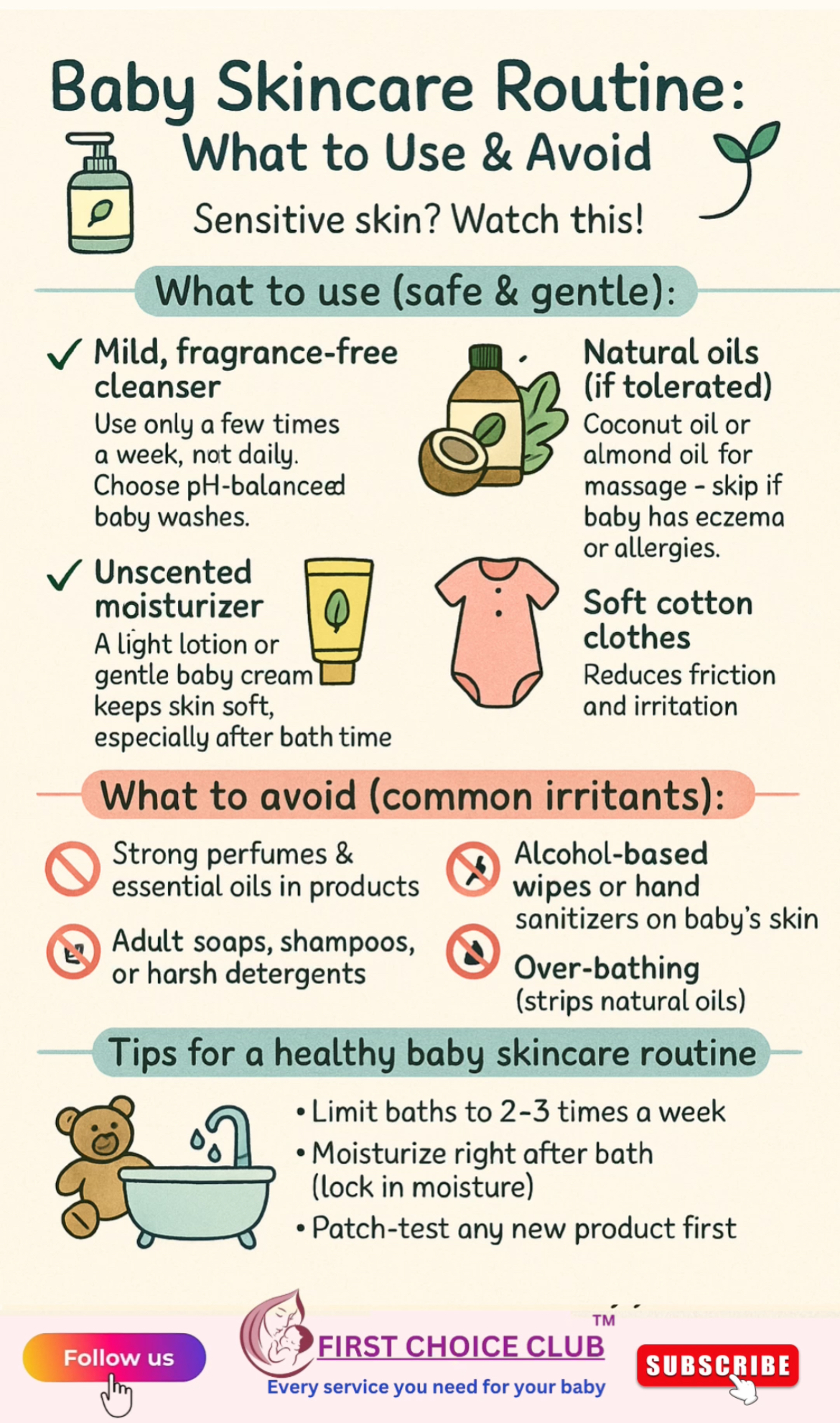
The guiding principle for baby skincare is less is more. Healthy newborn skin needs very little intervention. When products are needed, the criteria for choosing them are straightforward: fragrance-free, dye-free, pH-balanced, and formulated specifically for infant skin.
Cleanser
Use a mild, fragrance-free baby wash or baby soap no more than two to three times per week. Daily bathing with soap strips the natural oils from baby skin and disrupts the skin barrier, making conditions like eczema more likely. On non-bath days, a simple top-and-tail wash with warm water is all that is needed.
Look for cleansers with a pH of around 5.5 — close to the natural pH of baby skin. Many conventional soaps have a much higher pH and are too harsh for newborn skin even if they are marketed as gentle.
Moisturiser
A light, unscented moisturiser applied after bath time helps maintain the skin barrier and prevents moisture loss. This is particularly important in India's air-conditioned environments, which significantly reduce humidity. White petroleum jelly (Vaseline) is one of the most extensively studied and effective baby skin protectants and is often recommended by dermatologists as a first-line moisturiser for infants. It is inexpensive, fragrance-free, and very unlikely to cause reactions.
Massage Oil
Baby oil massage is a deeply rooted Indian tradition with real benefits for newborn development, including improved sleep, reduced colic symptoms, and support for weight gain in premature infants. Coconut oil and sunflower oil are generally considered safe for most babies. However, mustard oil — which is commonly used for baby massage in parts of India — has been associated with skin barrier disruption in research studies and is not recommended by dermatologists. If your baby has a family history of eczema, consult your pediatrician before using any massage oil.
Barrier Cream for Nappy Area
A zinc oxide-based barrier cream applied at each nappy change forms a protective layer between the skin and moisture, significantly reducing the likelihood of nappy rash. Apply a thin layer to clean, dry skin with each change. If a rash does develop, thicker application of zinc oxide cream and more frequent nappy-free time usually resolves it within two to three days. A rash that persists beyond four to five days, spreads significantly, or appears bright red and raw may be a fungal infection and needs assessment by your pediatrician.
What to Avoid on Baby Skin
Several commonly used products are unsuitable for infant skin despite being widely available and sometimes marketed for babies.
Common Baby Skin Conditions and What They Mean
Neonatal Acne
Approximately 20 percent of newborns develop small white or red spots on the face in the first few weeks of life, caused by maternal hormones still circulating in the baby's system. Neonatal acne typically resolves completely within four to six weeks without any treatment. Do not apply any cream to it — this will not speed resolution and may cause irritation.
Cradle Cap
Cradle cap — medically called seborrhoeic dermatitis — appears as yellow or brownish greasy scales on the scalp, typically in the first three months. It is not caused by poor hygiene or an allergy and is not itchy or uncomfortable for your baby. Gentle daily washing and careful combing with a soft baby brush usually resolves it over several weeks. Massaging a small amount of coconut oil onto the scalp before washing can help loosen the scales. Cradle cap that spreads to the face, behind the ears, or into skin folds, or that appears inflamed, is worth showing to your doctor.
Eczema
Eczema affects approximately 15 to 20 percent of babies and typically appears in the first six months of life as red, dry, itchy patches — most commonly on the cheeks, forehead, scalp, and limbs. Babies with a family history of eczema, asthma, or hay fever are at higher risk. The cornerstone of eczema management in infancy is consistent moisturisation — applying an emollient cream two to three times daily and immediately after bathing. If the eczema is severe, infected (weeping, crusty, or causing significant distress), or not responding to moisturiser within two weeks, your pediatrician can prescribe appropriate topical treatment.
When to See Your Doctor
Most baby skin conditions are benign and self-resolving. However, contact your pediatrician or dermatologist if your baby develops a rash that spreads rapidly, a rash that does not fade when pressed with a glass (non-blanching rash), skin that appears yellow or jaundiced, a rash accompanied by fever, or any skin change that is causing your baby visible distress.
For trusted pediatricians and baby care services in your area, visit firstchoiceclub.in — India's global directory for pregnancy and newborn services.
29 Jul