10 Signs Your Baby Is Happy and Healthy — A New Parent's Reassurance Guide
New parents spend a significant portion of their waking hours — and many of their sleeping ones — wondering whether their baby is okay. Is she eating enough? Is he gaining enough weight? Should she be smiling by now? This constant vigilance is not anxiety; it is love. And it is completely normal.
This guide gives you 10 specific, observable signs that your baby is thriving. Understanding what healthy development actually looks like gives you both reassurance when things are going well and confidence to recognise when they might not be.
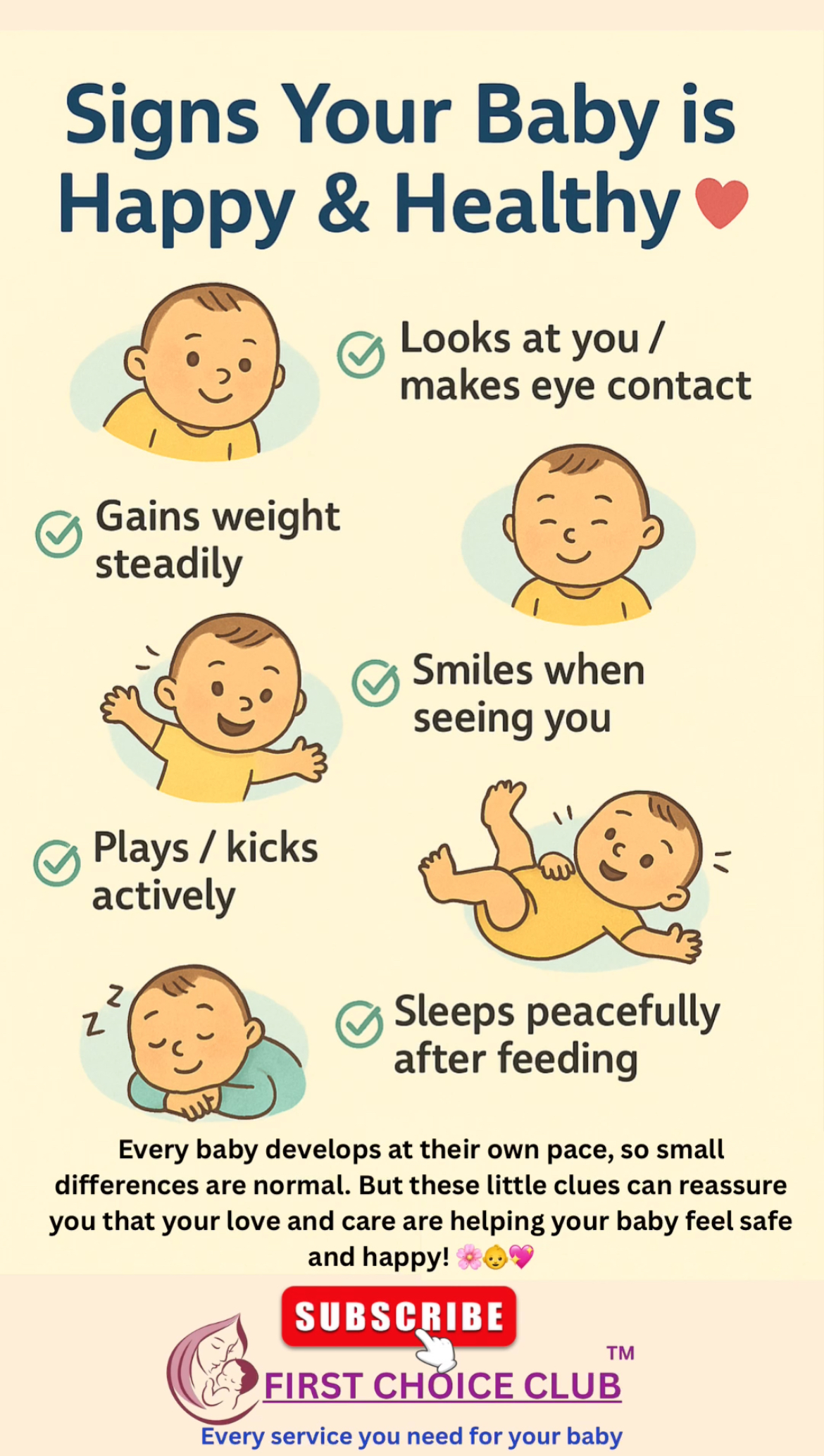
1. Your Baby Is Gaining Weight Steadily
Weight gain is one of the clearest indicators of healthy development in the first year of life. Most babies lose a small amount of weight in the first few days after birth — typically up to 7 to 10 percent of their birth weight — before regaining it by around day 10 to 14. After that, a healthy baby gaining weight from breastmilk or formula should gain approximately 150 to 200 grams per week in the first three months.
Your pediatrician will plot your baby's weight on a growth chart at each visit. What matters most is not hitting a specific number but following a consistent upward trajectory on the chart, regardless of which percentile your baby sits in.
2. Your Baby Is Producing Plenty of Wet and Dirty Diapers
Diaper output is one of the most reliable ways to know your baby is getting enough milk, especially in the early weeks before you can see how much your breastfed baby is consuming. After the first week of life, a well-fed baby should produce at least six wet diapers every 24 hours. Fewer than this is a signal to contact your pediatrician or lactation consultant the same day.
3. Your Baby Makes Eye Contact
From birth, babies are drawn to faces — and particularly to eyes. A healthy newborn will fix their gaze on your face during feeding and alert periods, and by six to eight weeks, this gaze becomes a genuine, intentional meeting of eyes. This early eye contact is one of the first forms of social communication and a strong sign of healthy neurological development.
4. Your Baby Smiles Socially
The first real smile — sometimes called the social smile — typically appears between six and eight weeks of age. This is different from the reflexive smiles of the newborn period. A social smile is a direct response to seeing your face, hearing your voice, or being engaged with. It requires facial muscle control, social awareness, and a functional visual system. The appearance of the social smile on schedule is one of the milestones pediatricians check most carefully at the six-week review.
5. Your Baby Is Alert and Curious During Wakeful Periods
A healthy baby is not alert all the time — newborns sleep for 14 to 17 hours per day and that is entirely normal. But during their wakeful periods, a thriving baby should show genuine interest in their environment. They should track moving objects with their eyes, turn toward sounds, and show responsiveness to your face and voice. A baby who is consistently flat, unresponsive or glassy-eyed during periods when they should be alert is worth mentioning to your doctor.
6. Your Baby Settles After Feeds
A fed baby is generally a content baby. While all babies cry, and some cry a great deal in the early months, a baby who is getting adequate nutrition should show a period of relative contentment after most feeds. If your baby cries continuously even immediately after feeding or never seems settled, this may indicate feeding difficulties, reflux, or another issue worth discussing with your pediatrician.
7. Your Baby Responds to Your Voice
From the moment of birth, your baby recognises your voice — they have been hearing it for months. A healthy baby should quiet or turn toward the sound of a familiar voice, and by three months, should begin to coo and vocalise in response to being spoken to. This back-and-forth vocal exchange is the earliest form of conversation and a foundational building block for language development.
8. Your Baby Is Meeting Developmental Milestones
Developmental milestones are general guidelines for when most babies develop specific skills. While there is significant normal variation — some babies roll at four months, others at six — the general arc of development should be progressing. Key early milestones include lifting the head during tummy time by two months, social smiling by eight weeks, reaching for objects by four to five months, and sitting with support by six months. If you have concerns about your baby's development, always raise them at your next pediatric appointment rather than waiting to see.
9. Your Baby's Skin, Eyes and Fontanelle Look Normal
Healthy baby skin should be soft, free of persistent rashes, and warm to the touch. The eyes should be bright and clear, with no persistent discharge, redness, or cloudiness. The fontanelle — the soft spot on the top of the head — should feel slightly soft when gently pressed and should neither be sunken inward nor bulging outward. A sunken fontanelle can indicate dehydration; a bulging one can indicate increased intracranial pressure. Both warrant same-day medical attention.
10. Your Baby Has a Healthy Cry
A healthy baby cry is strong, clear, and purposeful. It communicates need — hunger, discomfort, fatigue, or a desire for closeness. A cry that is weak, extremely high-pitched, or that sounds qualitatively different from your baby's usual cry is worth noting and mentioning to your doctor. You will learn to distinguish your baby's different cries over the first few weeks, and this instinctive knowledge is genuinely valuable. Trust it.
For trusted pediatricians and newborn care services in your area, visit firstchoiceclub.in — India's global directory for pregnancy and baby services.
21 Jul